
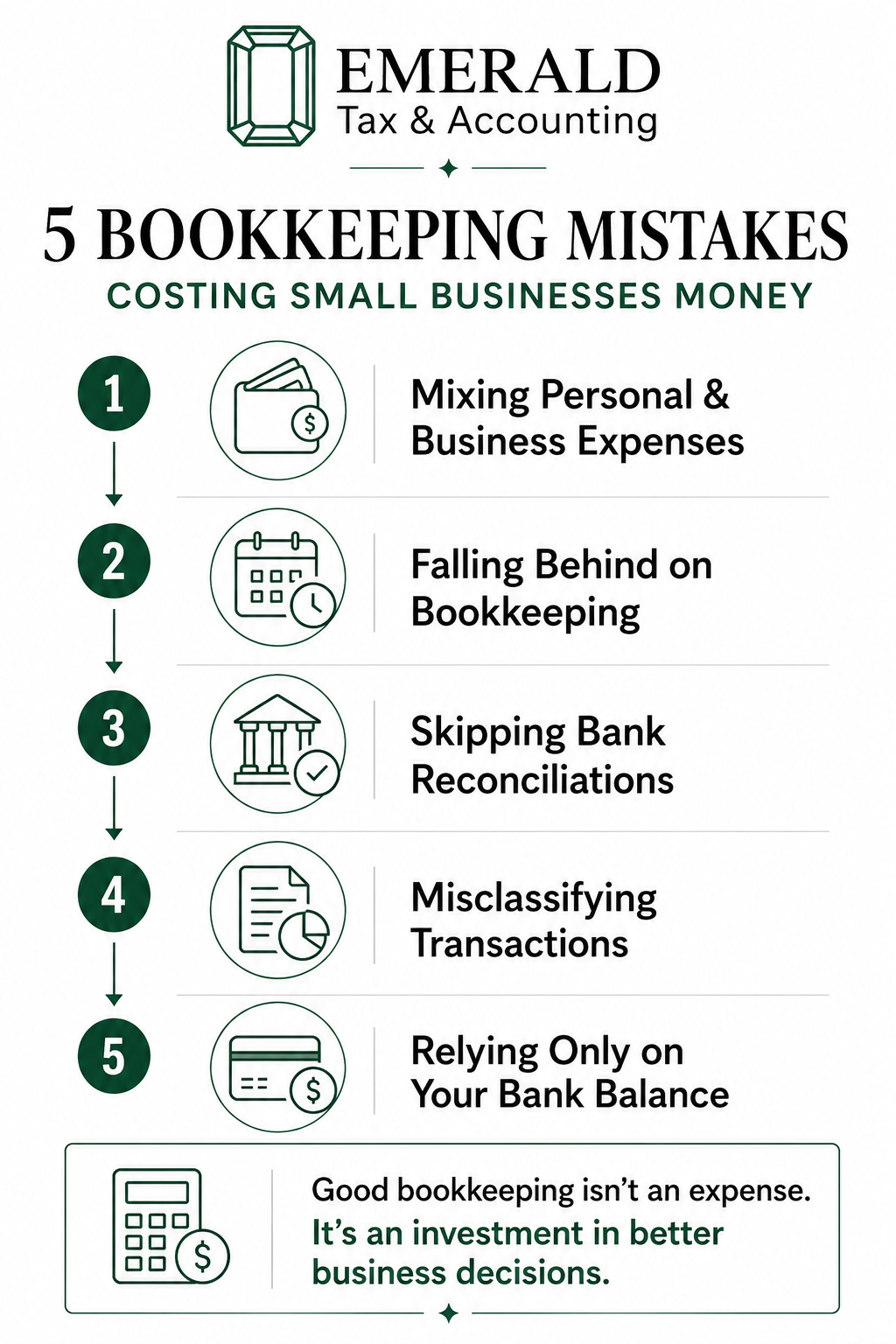
5 Bookkeeping Mistakes Costing Small Businesses Money
Why Bookkeeping Matters
Many small business owners think bookkeeping is simply recording income and expenses.
In reality, it's the foundation of every financial decision you make.
When your bookkeeping isn't accurate, you may:
Miss tax deductions
Make decisions based on incorrect information
Overlook cash flow problems
Pay unnecessary penalties
Spend more time fixing mistakes later
The good news is that most bookkeeping mistakes are preventable.
5 Bookkeeping Mistakes That Could Be Costing You Money
1. Mixing Personal and Business Expenses
One of the most common mistakes is using the same account for personal and business purchases.
This creates confusion when:
Categorizing expenses
Reconciling accounts
Preparing tax returns
Tracking business profitability
Keeping separate accounts makes bookkeeping easier and gives you a clearer picture of your business finances.
2. Falling Behind on Bookkeeping
Waiting until tax season to update your books often creates unnecessary stress.
When your records aren't current, it's difficult to:
Understand cash flow
Track profitability
Plan for upcoming expenses
Make confident business decisions
Monthly bookkeeping helps you stay informed throughout the year—not just during tax season.
3. Ignoring Bank Reconciliations
Reconciling your accounts helps ensure your bookkeeping matches your actual bank and credit card balances.
Skipping this step can lead to:
Missing transactions
Duplicate entries
Incorrect account balances
Financial reports you can't trust
Accurate reconciliations create accurate financial reports.
4. Misclassifying Income and Expenses
Putting transactions into the wrong categories can affect your financial reports and tax return.
Examples include:
Recording equipment as office supplies
Mixing owner draws with business expenses
Misclassifying contractor payments
Correct categorization helps you understand where your money is going and ensures more accurate reporting.
5. Only Looking at Your Bank Balance
Your bank balance tells you how much money is in your account.
It doesn't tell you:
Whether you're profitable
What bills are coming due
How much you're spending
Which services are making money
Financial reports provide a much clearer picture than your bank account alone.
Good Bookkeeping vs. Costly Bookkeeping Habits
Strong Financial Habits
Monthly bookkeeping
Separate business accounts
Accurate reconciliations
Organized records
Regular financial reviews
Costly Habits
Waiting until tax season
Mixing personal and business expenses
Ignoring financial reports
Guessing where money is going
Falling behind every month
One set of habits creates confidence.
The other creates expensive surprises.
Reality Check
Many financial problems don't begin because businesses aren't making enough money.
They begin because owners don't have accurate financial information.
When your bookkeeping is current, you can identify problems early, make informed decisions, and avoid costly mistakes before they grow.
Why Financial Clarity Matters
Bookkeeping isn't just about preparing for tax season.
It's about understanding your business.
When your books are accurate, you can:
Monitor cash flow.
Track profitability.
Identify unnecessary expenses.
Make smarter financial decisions.
Plan confidently for future growth.
Financial clarity helps business owners spend less time worrying about their numbers and more time growing their business.
Ready to Improve Your Bookkeeping?
Accurate bookkeeping gives you more than organized records—it gives you confidence.
Whether you're just starting your business or trying to get your books back on track, strong bookkeeping habits help you make better financial decisions throughout the year.
At Emerald Tax & Accounting, we help small business owners in Coastal GA maintain accurate books, understand their financial reports, and gain the clarity they need to grow with confidence.
Ready to stop guessing and start understanding your numbers? Contact Emerald Tax & Accounting today to learn how professional bookkeeping can help your business succeed.
