
Can Bad Bookkeeping Affect My Taxes?
Tax problems do not always start at tax time.
Sometimes, they start months earlier with bookkeeping that is incomplete, inaccurate, or simply not being maintained.
When your financial records are not accurate, preparing your tax return becomes more difficult. You may miss legitimate deductions, report incorrect information, or spend valuable time trying to clean up your books before you can even begin preparing your taxes.
The connection is simple:
Your tax return depends heavily on the financial information your business keeps throughout the year.
If the bookkeeping is wrong, your tax information may be wrong too.
The Problem: Your Tax Return Is Only as Reliable as Your Financial Records
Many small business owners think of bookkeeping and taxes as two separate things.
Bookkeeping happens throughout the year.
Taxes happen once a year.
But the two are closely connected.
Your bookkeeping records help show:
How much income your business earned.
How much the business spent.
Which expenses may be deductible.
What assets the business purchased.
How much you paid contractors or employees.
What financial activity occurred throughout the year.
If transactions are missing, expenses are categorized incorrectly, or personal and business finances are mixed together, preparing an accurate tax return becomes more complicated.
The Direct Answer: Yes, Bad Bookkeeping Can Affect Your Taxes
Poor bookkeeping can create tax problems in several ways.
You could report incorrect income.
You could miss legitimate business deductions.
You could categorize expenses incorrectly.
You could have difficulty supporting information reported on your return.
You could also spend more time and money cleaning up your records before your taxes can be prepared.
Accurate bookkeeping does not just make tax season easier.
It helps create a stronger financial foundation for accurate tax preparation and better tax planning.
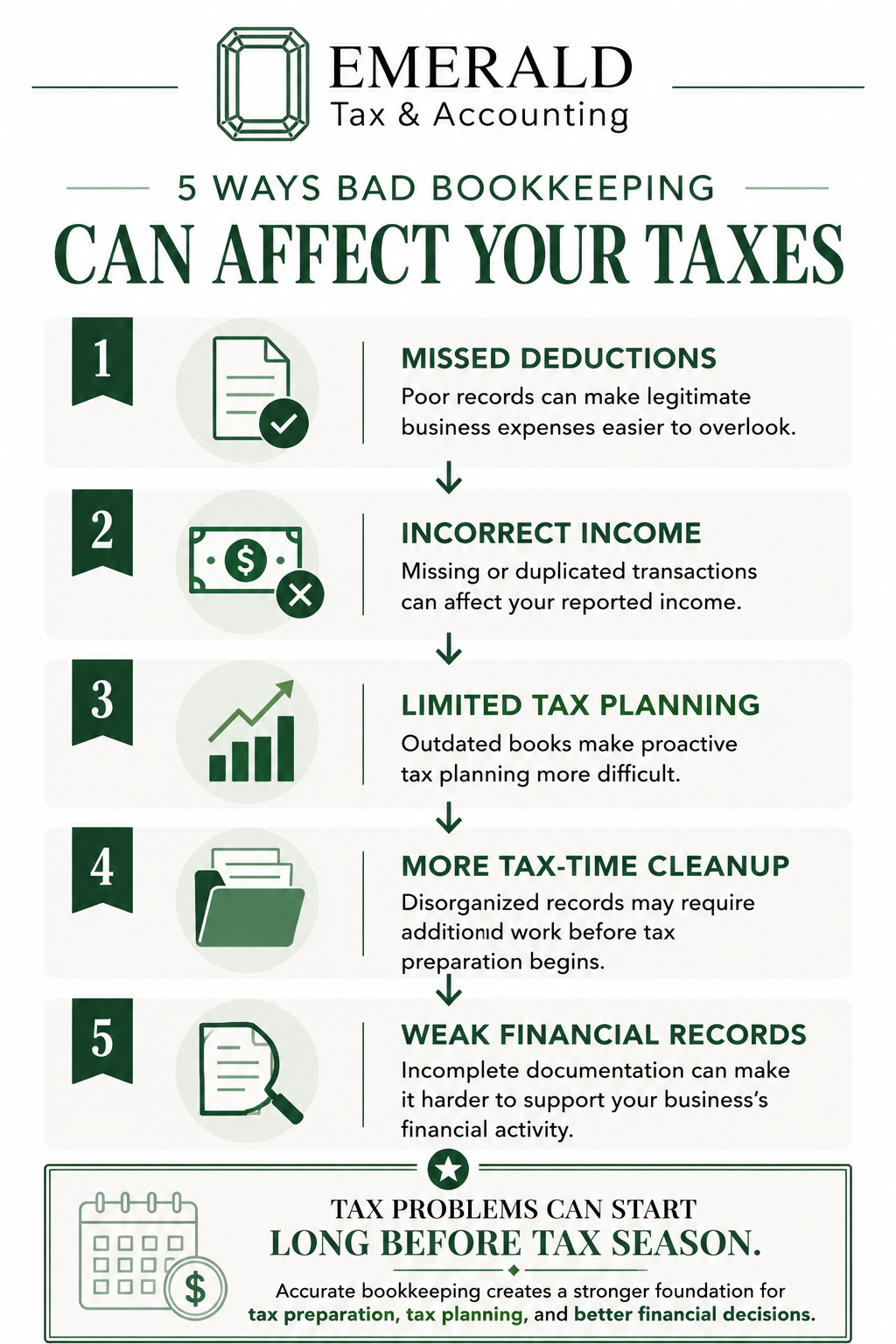
Five Ways Bad Bookkeeping Can Affect Your Taxes
Step 1: You Could Miss Tax Deductions
If business expenses are not recorded or are categorized incorrectly, you may overlook legitimate deductions.
That means you could potentially pay tax on more income than necessary.
Consistent bookkeeping helps ensure your business expenses are properly documented and organized.
Step 2: Your Income Could Be Reported Incorrectly
Missing or duplicated transactions can create an inaccurate picture of your business income.
If your records do not match your actual financial activity, additional work may be needed to determine the correct numbers before preparing your return.
Step 3: Tax Planning Becomes More Difficult
Good tax planning requires current financial information.
If your books are months behind, it is difficult to estimate your tax liability or identify planning opportunities before the end of the year.
By the time your bookkeeping is cleaned up, some opportunities may have already passed.
Step 4: Tax Season Can Become More Expensive and Stressful
When your books are disorganized, someone has to fix them.
That may mean spending additional time reviewing transactions, finding missing information, reconciling accounts, and correcting errors before tax preparation can begin.
Keeping your bookkeeping current throughout the year can reduce the amount of cleanup needed at tax time.
Step 5: You May Have Trouble Supporting Your Records
Good recordkeeping matters if questions ever arise about information reported on your tax return.
Receipts, invoices, bank records, and organized bookkeeping can help support your business income and expenses.
The better your records are, the easier it is to understand and explain your financial activity.
Comparison: Poor Bookkeeping vs. Accurate Bookkeeping
Poor Bookkeeping:
Transactions may be missing or duplicated.
Business expenses may be categorized incorrectly.
Income may not be accurately recorded.
Potential deductions can be overlooked.
Tax planning is based on incomplete information.
Tax preparation may require additional cleanup.
Financial decisions are made without reliable numbers.
Accurate Bookkeeping:
Income and expenses are consistently recorded.
Transactions are properly categorized.
Financial accounts are regularly reconciled.
Business records are easier to organize and review.
Tax planning can use more current information.
Tax preparation becomes more efficient.
Business owners have a clearer picture of their finances.
Good bookkeeping is not only about staying organized.
It helps you understand your business throughout the year and prepare for tax season before it arrives.
The Reality Check: Waiting Until Tax Season Can Be Too Late
One of the biggest mistakes small business owners make is waiting until tax season to organize their financial records.
By then, you may be trying to remember transactions that happened months ago.
Receipts may be missing.
Expenses may be difficult to identify.
Accounts may not have been reconciled.
And instead of focusing on tax preparation and planning, the first priority becomes fixing the bookkeeping.
The earlier financial problems are identified, the easier they usually are to address.
Monthly bookkeeping creates an opportunity to catch errors, organize records, and understand your financial position throughout the year.
The Bigger Picture: Better Bookkeeping Supports Better Tax Planning
Bookkeeping should do more than prepare you to file a tax return.
It should help you understand your business.
When your financial records are current, you can have more productive conversations about tax planning and business decisions.
You can better understand your income.
You can monitor expenses.
You can prepare for potential tax obligations.
And you can make financial decisions using information that reflects what is actually happening in your business.
At Emerald Tax & Accounting, we believe strong financial decisions start with a strong financial foundation.
That foundation begins with accurate, consistent bookkeeping.
Are Your Books Ready for Tax Season?
Ask yourself:
If you had to prepare your business tax return today, would your financial records be ready?
If the answer is no, waiting until tax season may only make the cleanup more difficult.
Getting your bookkeeping current can help you understand where your business stands, prepare for upcoming tax obligations, and create a stronger foundation for future tax planning.
Good tax preparation starts long before a tax return is filed.
It starts with good bookkeeping.