
Most Small Business Owners Wait Too Long to Start Tax Planning
Direct Answer
Many small business owners believe tax planning is only necessary once their business reaches six figures or becomes more complex. The reality is that once your income becomes consistent, taxes become an ongoing part of running your business—not just something you think about during tax season.
Proactive tax planning can help reduce surprise tax bills, improve cash flow, keep your finances organized, and help you keep more of what you earn.
Whether you're a freelancer, creative entrepreneur, service provider, or self-employed professional in Brunswick, GA, tax planning should be part of your year-round financial strategy.
How-To Steps
1. Estimate Your Year-End Income
One of the biggest mistakes small business owners make is waiting until tax season to figure out how much they earned.
Knowing your projected annual income helps you:
Prepare for taxes ahead of time
Make informed business decisions
Avoid unexpected tax balances
Better understand your profitability
You don't need perfect numbers. You simply need a reasonable estimate that helps you plan ahead.
2. Start Saving for Taxes Year-Round
Taxes become stressful when business owners treat them like a surprise expense.
Setting aside money throughout the year helps create financial stability and confidence.
Benefits include:
Reduced financial stress
Better cash flow management
Fewer surprises at tax time
Improved financial organization
Consistent saving is often more effective than trying to come up with a large payment all at once.
3. Review Your Business Expenses Regularly
Many business owners miss valuable deductions because they only review expenses once a year.
Monthly reviews help you:
Identify deductible expenses
Catch bookkeeping mistakes
Improve financial visibility
Stay organized throughout the year
Good records make tax season significantly easier.
4. Understand How Depreciation Works
Certain business purchases may provide tax benefits over time rather than all at once.
Items such as:
Equipment
Technology
Business tools
Office furniture
can impact your tax situation differently than everyday expenses.
Understanding how larger purchases affect your taxes can help you make smarter financial decisions.
5. Review Whether Your Business Structure Still Makes Sense
The structure that worked when you started your business may not be the best option as your income grows.
As revenue becomes more consistent, it may be worth reviewing:
Sole Proprietor
LLC
S Corporation
Choosing the right structure can improve efficiency and potentially create tax advantages.
This isn't a decision to make based on internet advice alone. Every business is different.
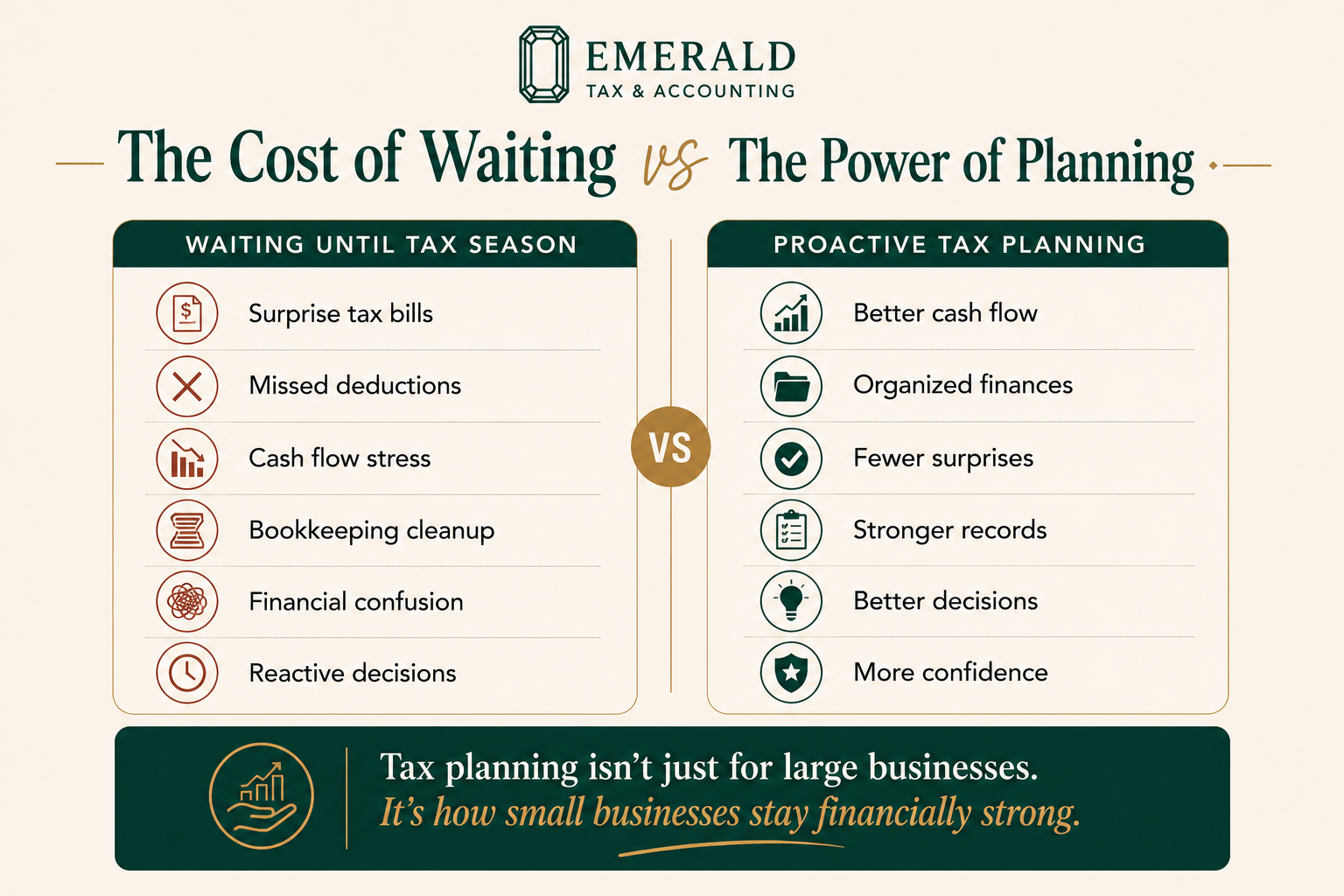
Reactive Tax Planning vs Proactive Tax Planning
Reactive Tax Planning
Waits until tax season
Creates unnecessary stress
Misses planning opportunities
Leads to surprise tax bills
Creates bookkeeping challenges
Makes financial decisions after the fact
Proactive Tax Planning
Happens throughout the year
Creates financial clarity
Improves cash flow management
Reduces surprises
Supports business growth
Helps owners make informed decisions
Reality Check
Many small business owners under believe tax planning is only for larger businesses.
But financial stress often starts long before revenue reaches six figures.
Most business owners are already balancing:
Client work
Marketing
Operations
Scheduling
Bookkeeping
Daily responsibilities
As a result, taxes often become:
"I'll deal with it later."
Unfortunately, later often turns into:
Surprise tax bills
Missed deductions
Bookkeeping cleanup
Cash flow stress
Financial confusion
Strong tax planning creates clarity before small problems become expensive problems.
Ready to Stop Guessing at Your Taxes?
You don't have to wait until tax season to understand your numbers.
Emerald Tax & Accounting helps Brunswick, GA small business owners stay organized, prepared, and financially confident year-round.
Whether you need bookkeeping support, tax planning, or help understanding your business finances, we're here to help you build a stronger financial foundation.
The sooner you start planning, the more options you usually have.