
Why Do My Numbers Not Match My Bank Account?
One of the most frustrating bookkeeping problems for small business owners is realizing that their financial reports do not match their actual bank account balance.
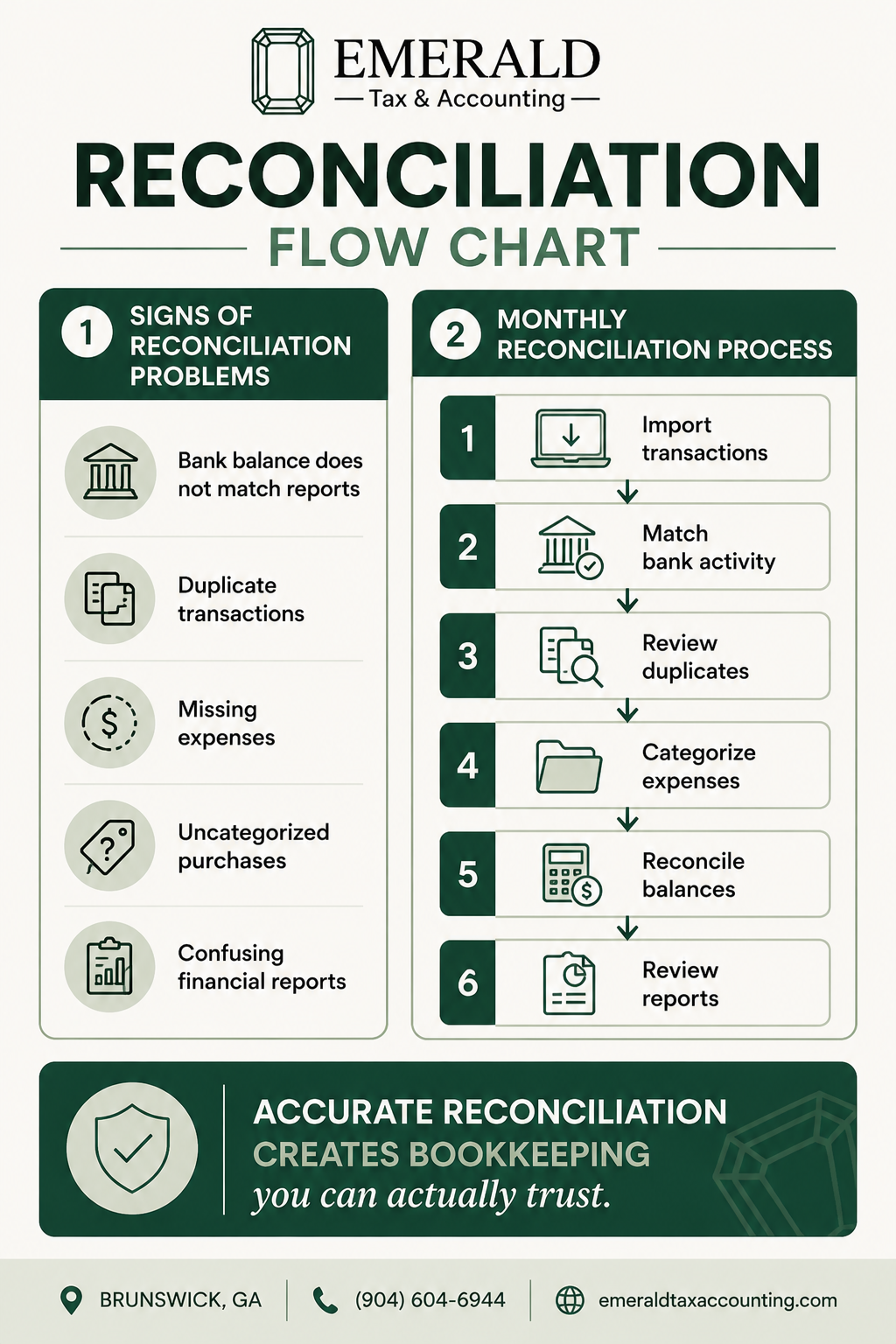
Many business owners notice:
incorrect account balances
duplicate transactions
missing expenses
unexplained differences
reports that simply do not feel accurate
When your books do not match your bank account, it usually means your accounts are not being reconciled correctly.
At Emerald Tax & Accounting Inc., we help Brunswick small business owners clean up bookkeeping issues and create financial records they can actually trust.
The Direct Answer
If your numbers do not match your bank account, your bookkeeping likely has reconciliation problems.
Reconciliation is the process of matching:
your bookkeeping records
withyour actual bank activity
Reconciliation problems usually happen because of:
duplicate transactions
missing entries
uncategorized expenses
incorrect bank feeds
manual data entry mistakes
outdated bookkeeping
Without reconciliation, financial reports become unreliable and difficult to trust.
The How-To Steps
1. Reconcile Accounts Regularly
Every business account should be reconciled consistently, including:
checking accounts
savings accounts
business credit cards
payment processors
Monthly reconciliation helps identify bookkeeping problems early before they become larger financial issues.
2. Check for Duplicate Transactions
Duplicate transactions are one of the most common bookkeeping mistakes.
This often happens when:
transactions are imported multiple times
expenses are manually entered and bank-fed
software syncs incorrectly
Even small duplicate entries can throw off financial reports significantly over time.
3. Review Missing or Uncategorized Entries
Some bookkeeping problems happen because transactions are:
missing entirely
left uncategorized
assigned to the wrong category
This creates inaccurate reports and makes it difficult to understand where money is actually going.
Proper categorization creates clearer financial visibility and more reliable reporting.
4. Compare Reports to Your Bank Activity
Your bookkeeping reports should consistently match your actual bank balances.
Reviewing:
account balances
transaction history
categorized expenses
monthly statements
This helps identify discrepancies before they create larger bookkeeping or tax problems.
5. Fix Errors Before Tax Season
Many business owners do not realize there is a problem until tax season arrives.
Unfortunately, inaccurate books can lead to:
incorrect reports
bookkeeping cleanup
missed deductions
tax filing issues
financial confusion
Fixing reconciliation issues early helps create cleaner financial systems year-round.
Not Reconciling vs Monthly Reconciliation
Not Reconciling Accounts
Incorrect balances
Duplicate transactions
Missing expenses
Confusing reports
Financial uncertainty
Stress during tax season
Monthly Reconciliation
Accurate financial records
Cleaner bookkeeping
Clearer financial reports
Better expense tracking
Greater confidence in your numbers
More reliable business decisions
The Reality Check
Most small business owners are not reviewing bookkeeping reports every day.
They are busy managing:
customers
scheduling
payroll
inventory
operations
daily business responsibilities
Because of that, bookkeeping errors can quietly build over time without being noticed.
Many business owners eventually realize:
“I don’t actually trust my numbers.”
Unfortunately, when financial reports are inaccurate, business decisions become harder to make confidently.
Strong reconciliation systems help business owners create financial clarity before problems become overwhelming.
Ready for Financial Reports You Can Actually Trust?
Emerald Tax & Accounting Inc. helps small business owners reconcile accounts, organize their bookkeeping, and create cleaner financial systems that are easier to manage year-round. Because accurate numbers create better business decisions.