
Virtual Healthcare Providers: Tax Help for the Digital Age in Brunswick, GA
Virtual healthcare has changed the way providers serve patients.
From telehealth nurse practitioners and online therapists to virtual nutritionists and wellness professionals, more healthcare providers are building flexible businesses outside of traditional offices. But while virtual care creates more freedom, it also creates new financial responsibilities — especially when taxes and bookkeeping are involved.
Many independent healthcare providers operate without the financial systems larger practices have in place. As income grows, taxes, quarterly payments, deductions, and compliance can quickly become overwhelming.
At Emerald Tax & Accounting, we help Brunswick, GA small businesses create financial clarity through proactive tax planning, bookkeeping, and organized systems designed for long-term growth.
If you’re a virtual healthcare provider, here’s what you need to know to stay organized, compliant, and financially prepared year-round.
The Direct Answer
Most virtual healthcare providers struggle with taxes because they operate like independent businesses without structured financial systems.
Without proactive planning, many providers experience:
surprise tax bills
inconsistent bookkeeping
missed deductions
cash flow stress
disorganized records
Strong financial systems help healthcare professionals reduce stress, stay compliant, and make better business decisions as they grow.
1. Understand Your Business Structure
Many virtual healthcare providers work as:
independent contractors (1099)
sole proprietors
LLCs
hybrid virtual and in-person providers
Your entity structure directly impacts:
how you pay taxes
your liability protection
quarterly tax obligations
long-term tax savings opportunities
As income increases, the right structure can create significant financial advantages.
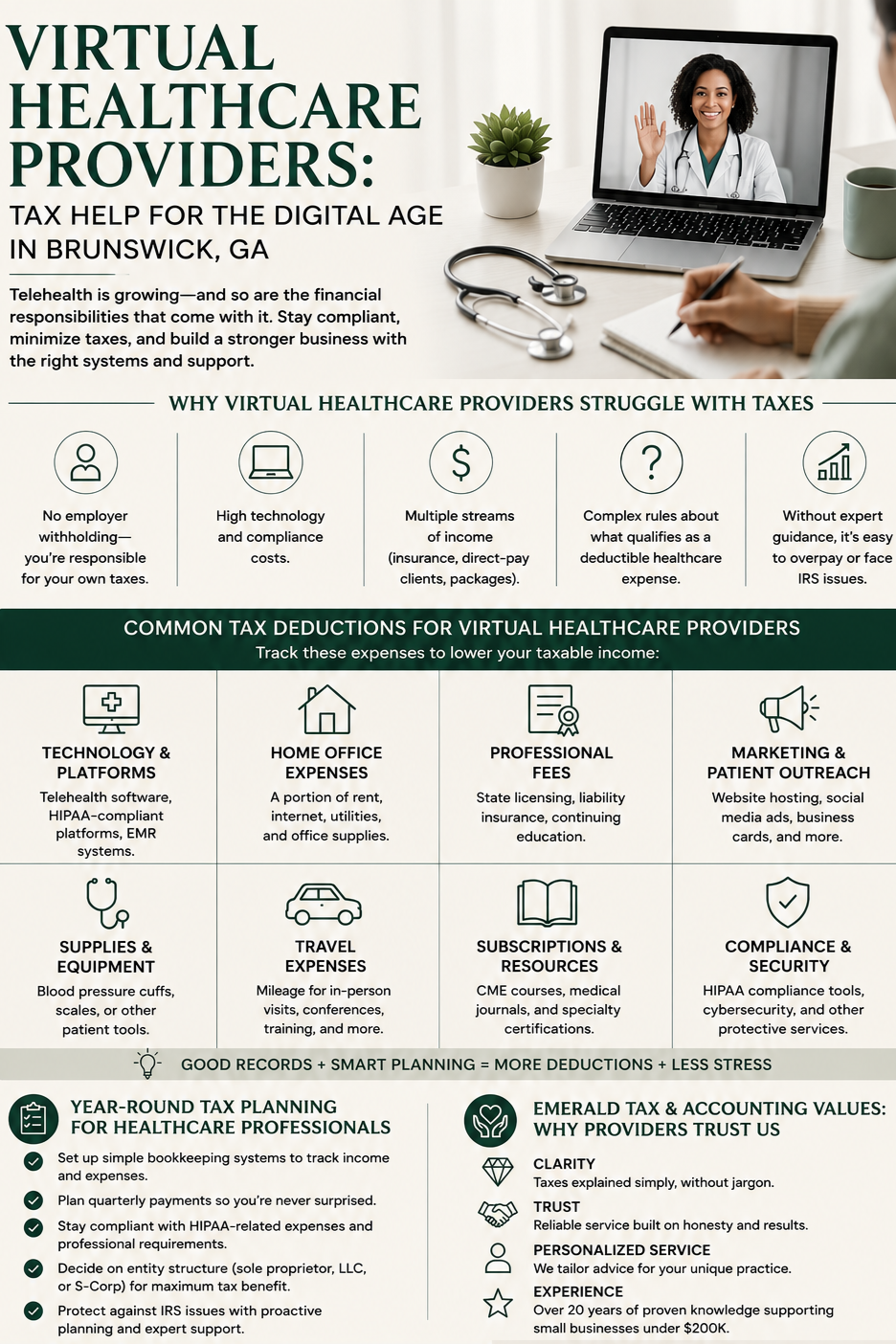
2. Track Industry-Specific Deductions
Virtual healthcare providers often miss deductions simply because they are not tracking expenses consistently throughout the year.
Common deductions may include:
Technology & Telehealth Platforms
HIPAA-compliant software
telehealth platforms
EMR systems
scheduling software
Home Office Expenses
internet
utilities
office furniture
workspace expenses
Professional Expenses
licensing fees
liability insurance
continuing education
certifications
medical journals
Marketing & Business Growth
website hosting
branding
social media advertising
business cards
Travel & Training
conferences
professional development
mileage for in-person visits
The key is not just knowing what is deductible — it’s keeping organized records year-round.
3. Separate Personal and Business Finances
One of the most common mistakes small business owners make is mixing personal and business expenses.
When finances are combined, it becomes harder to:
track deductions accurately
understand profitability
prepare taxes correctly
maintain organized records
Clear separation creates cleaner bookkeeping and better financial visibility.
4. Plan for Quarterly Taxes
Unlike traditional employees, virtual healthcare providers usually do not have taxes automatically withheld.
That means quarterly tax planning becomes essential.
Without a plan, many providers:
underpay throughout the year
face penalties
struggle with cash flow during tax season
Proactive tax planning helps create stability and prevents surprises later.
5. Build Systems Before Your Business Grows
Growth without structure creates stress.
As virtual healthcare businesses grow, financial organization becomes even more important. Better systems help providers:
stay compliant
reduce overwhelm
improve cash flow visibility
prepare for tax season
make better long-term decisions
Financial clarity allows healthcare providers to focus more energy on patient care instead of financial confusion.
Why Brunswick, GA Healthcare Providers Work With Emerald Tax & Accounting
At Emerald Tax & Accounting, we work with small businesses that want practical, straightforward financial guidance without unnecessary complexity.
We believe small business owners deserve:
clear communication
organized systems
proactive support
long-term financial clarity
Our goal is not just to file taxes — it’s to help business owners create financial systems that support sustainable growth.
Ready to Simplify Your Business Finances?
If you’re a virtual healthcare provider in Brunswick, GA looking for better bookkeeping, tax planning, and financial organization, Emerald Tax & Accounting is here to help.
Whether you operate fully online or through a hybrid practice, strong financial systems can help reduce stress, improve clarity, and support long-term business growth.
📍 Brunswick, GA
📞912-617-9811
At Emerald Tax & Accounting we help Brunswick small businesses stay organized, proactive, and financially confident.