
How Much Does It Cost to Hire a Bookkeeper?
If you're considering hiring a bookkeeper, one of the first questions you probably have is simple:
How much is this going to cost?
The answer depends on your business.
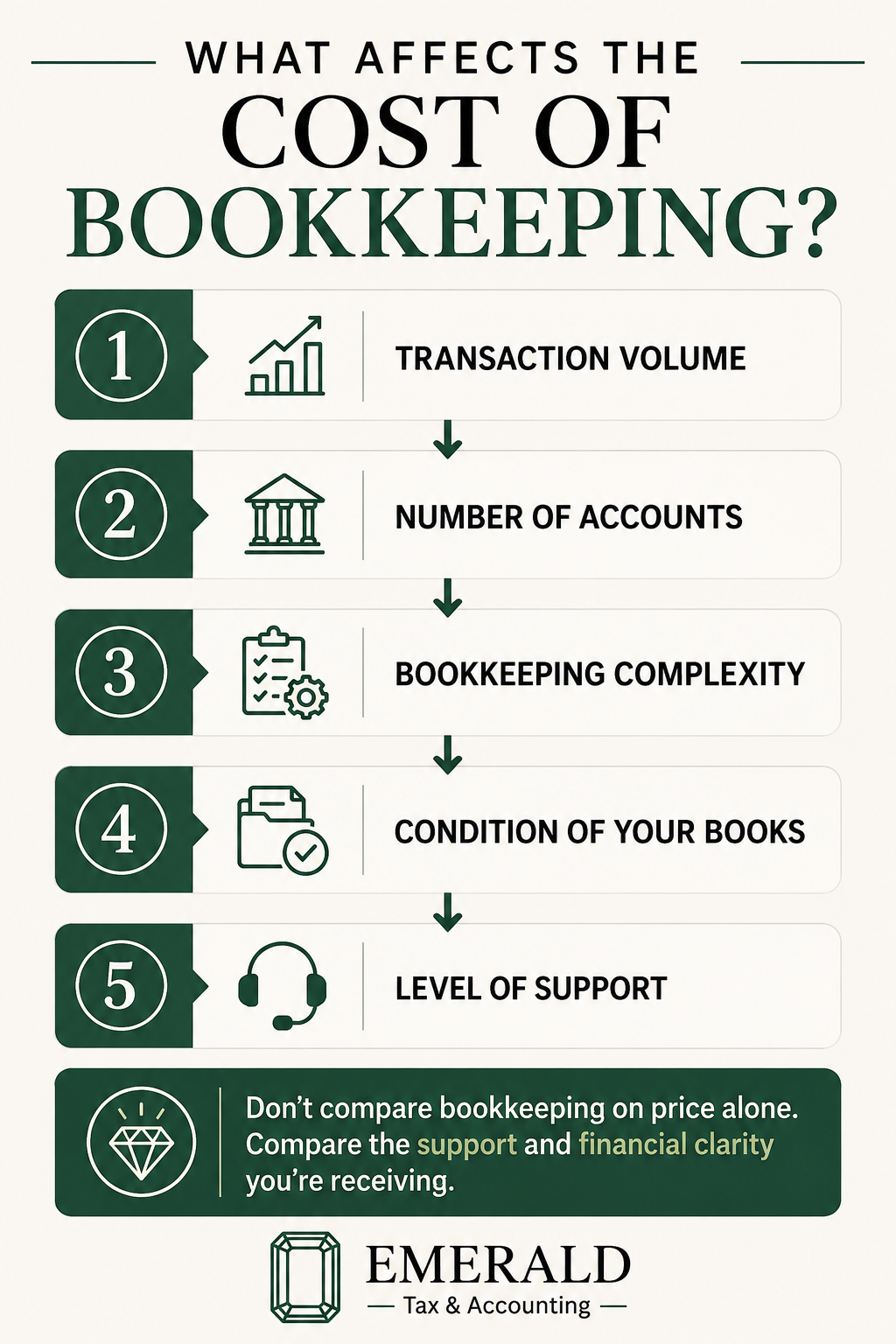
Bookkeeping costs can vary based on the size of your business, how many transactions you have each month, the number of financial accounts you use, the condition of your current books, and how much ongoing support you need.
While price matters, it shouldn't be the only factor you consider.
The goal of professional bookkeeping isn't simply to enter transactions. Good bookkeeping should give you organized records, accurate financial information, and a clearer understanding of what's happening inside your business.
What Determines the Cost of Bookkeeping?
There isn't one standard bookkeeping price that works for every small business. A business with one bank account and a small number of monthly transactions may require significantly less work than a growing company with multiple accounts, credit cards, employees, and hundreds of transactions.
Here are five factors that can affect what you pay.
1. Determine What Bookkeeping Help You Need
Start by looking at what you actually need your bookkeeper to handle.
Some business owners only need basic monthly bookkeeping. Others need a more complete service that may include:
Transaction categorization
Bank and credit card reconciliations
Monthly financial reports
Account reviews
Bookkeeping cleanup
Tax-ready financial records
Ongoing bookkeeping support
The more comprehensive the service, the more you can generally expect to invest.
But comprehensive bookkeeping can also take significantly more financial work off your plate.
2. Consider Your Monthly Transaction Volume
The number of transactions moving through your business each month is another major factor.
A business processing 50 transactions each month typically requires less bookkeeping work than one processing 500.
As your business grows, you may have more:
Customer payments
Vendor purchases
Business expenses
Credit card transactions
Bank transfers
Payroll activity
More financial activity generally means more information that needs to be properly categorized, reconciled, and reviewed.
3. Review the Current Condition of Your Books
Are your books already organized and up to date?
Or has it been several months since anyone reviewed them?
The condition of your bookkeeping can significantly affect your initial cost.
If your records contain missing transactions, unreconciled accounts, duplicate entries, incorrect categorizations, or months of unfinished bookkeeping, you may need a cleanup before regular monthly bookkeeping can begin.
This is why waiting to address bookkeeping problems can sometimes make them more expensive to fix later.
4. Compare What Is Included in Each Bookkeeping Service
Two bookkeeping services can have very different prices because they may provide very different levels of support.
Instead of comparing the monthly price alone, ask what you're actually receiving.
For example, does the service include:
Monthly reconciliations?
Financial reports?
Regular account reviews?
Tax-ready records?
Communication when questions arise?
Ongoing support?
A lower monthly price isn't necessarily a better value if you're still responsible for much of the financial organization yourself.
5. Evaluate the Value of Accurate Financial Records
Bookkeeping isn't only an administrative expense.
It's part of your business's financial foundation.
Accurate bookkeeping can help you understand:
How much your business is earning
Where your money is going
Whether expenses are increasing
How your cash flow is changing
Whether your business is actually profitable
What information you need when making financial decisions
That financial visibility becomes increasingly important as your business grows.
Lower-Cost Bookkeeping vs. Full-Service Bookkeeping
When comparing bookkeeping providers, it's important to look beyond the price.
Lower-Cost Bookkeeping
A lower-cost service may:
Provide basic transaction categorization
Include limited communication
Require more work from the business owner
Offer fewer financial reporting options
Provide little ongoing guidance
For a very simple business, this may be enough.
But business owners should understand exactly what is — and isn't — included.
Full-Service Bookkeeping
A more comprehensive bookkeeping service may:
Keep financial records consistently organized
Reconcile bank and credit card accounts
Provide regular financial reporting
Review accounts for potential issues
Maintain tax-ready financial records
Provide ongoing bookkeeping support
The purpose is not simply to keep the books updated.
It's to create a stronger financial foundation for the business.
Is the Cheapest Bookkeeping Option Actually Cheaper?
Not always.
Choosing bookkeeping based entirely on price can become expensive if problems aren't discovered until months or years later.
Inaccurate or neglected books can potentially lead to:
Expensive bookkeeping cleanup
Difficulty preparing tax returns
Missing or inaccurate financial information
Confusion about cash flow
Poor business decisions
Additional work for your accountant or tax professional
A business owner may save money upfront only to spend more correcting the records later.
The better question isn't simply:
"What's the cheapest bookkeeping service?"
It's:
"What level of bookkeeping support does my business need to maintain accurate financial records?"
How Much Should Your Business Spend on Bookkeeping?
There isn't one number that's right for every business.
Your bookkeeping needs should reflect the size, activity, and complexity of your company.
A small business with simple finances may need relatively basic support. A growing business with multiple accounts, employees, higher transaction volume, or more complex finances may benefit from a more comprehensive bookkeeping service.
Before choosing a provider, make sure you understand what you're paying for and how the service will support your business throughout the year.
Build a Stronger Financial Foundation
Professional bookkeeping should do more than keep transactions organized.
It should help you maintain accurate records, understand your financial position, and prepare your business for better financial decisions.
Emerald Tax & Accounting helps small business owners determine the level of bookkeeping support that fits their business and financial needs.
If you're unsure what level of bookkeeping support your business needs, start by evaluating your transaction volume, number of accounts, current bookkeeping condition, and the amount of ongoing support you want.