
How Do I Separate Personal and Business Expenses?
One of the most common financial mistakes small business owners make is mixing personal and business expenses together.
At first, it may not seem like a major problem. Many business owners start by:
using personal debit cards
paying for business purchases from personal accounts
transferring money back and forth without tracking it
mixing subscriptions, supplies, and income together
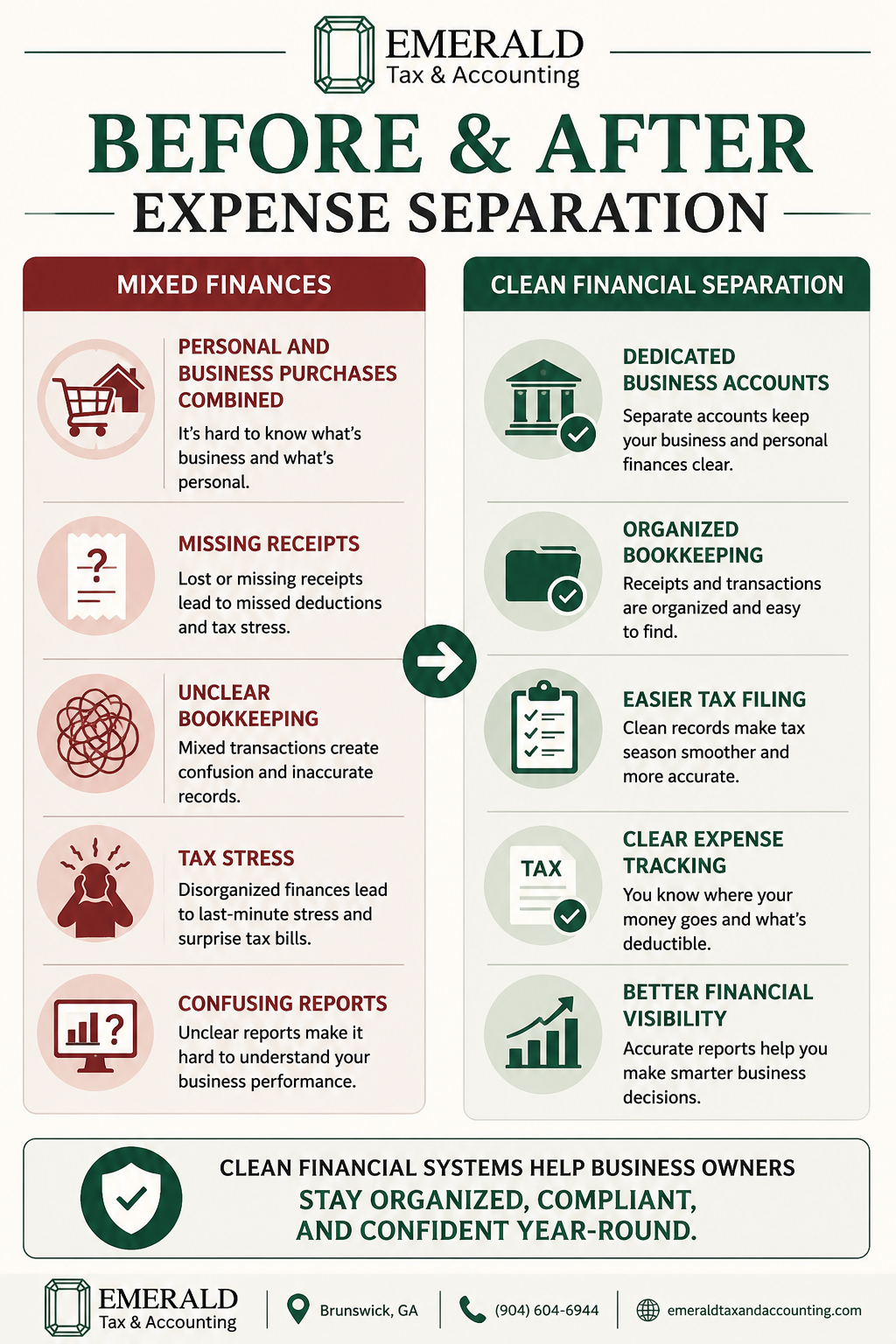
But over time, mixed finances can create bookkeeping problems, tax stress, and inaccurate financial records.
At Emerald Tax & Accounting Inc., we help small business owners create cleaner financial systems that make bookkeeping, taxes, and business decisions significantly easier.
The Direct Answer
The best way to separate personal and business expenses is by creating dedicated financial systems for your business immediately.
That includes:
opening a business bank account
using separate debit or credit cards
keeping business purchases separate
tracking income and expenses consistently
cleaning up past mixed transactions
Separating finances helps business owners:
improve bookkeeping accuracy
reduce tax confusion
protect deductions
create clearer financial reports
reduce IRS risk
The earlier you separate everything properly, the easier your finances become long term.
The How-To Steps
1. Open a Dedicated Business Bank Account
Every business should have:
a separate business checking account
separate business debit or credit cards
dedicated accounts for income and expenses
This creates a clear financial boundary between:
personal spending
business activity
Even solo business owners benefit from this immediately.
2. Move Business Expenses Out of Personal Accounts
Start reviewing:
subscriptions
software
supplies
marketing expenses
fuel purchases
business-related travel
equipment purchases
Any recurring business expense should move to the business account whenever possible.
3. Stop Mixing Purchases Going Forward
One of the biggest bookkeeping problems comes from mixed transactions.
For example:
buying groceries and office supplies together
paying personal bills from business income
using personal cards for random business purchases
Keeping transactions separated creates much cleaner bookkeeping throughout the year.
4. Clean Up Past Transactions
Many small business owners already have months — or years — of mixed financial activity.
That’s more common than people think.
Cleaning up old transactions helps:
organize bookkeeping
improve tax accuracy
identify deductions
reduce financial confusion
prepare for tax season properly
The sooner cleanup happens, the easier future bookkeeping becomes.
The Reality Check
Most small business owners do not intentionally create messy financial systems.
In the beginning, many businesses start quickly with:
personal bank accounts
personal cards
simple transfers
inconsistent bookkeeping
But as income grows, mixed finances create bigger problems.
Many business owners eventually realize:
“I don’t actually know what my business is spending.”
Unfortunately, financial confusion can lead to:
bookkeeping cleanup
missed deductions
tax stress
inaccurate reporting
cash flow problems
Strong financial organization creates stability long before tax season arrives.
Ready to Clean Up Your Business Finances?
Emerald Tax & Accounting Inc. helps small business owners separate personal and business finances with clear bookkeeping systems and approachable tax support designed for businesses earning under $200K.
📍 Brunswick, GA
📞 (904) 604-6944
Because organized finances make running a business easier.