
How Do I Know If My Bookkeeping Is Wrong?
If your bookkeeping numbers do not match your bank account, your reports feel inaccurate, or you constantly question your financial information, your bookkeeping is likely incorrect.
Many business owners assume their bookkeeping is “mostly fine” until:
reports stop making sense
tax season becomes stressful
cash flow feels inconsistent
accounts no longer reconcile
Small bookkeeping problems create larger financial confusion over time.
Accurate bookkeeping is the foundation of financial clarity.
Here are some of the biggest warning signs your bookkeeping may need attention:
The How-To Steps
1. Compare Your Bank Balance to Your Books
One of the biggest warning signs of bookkeeping problems is when your reports do not match your actual bank account balances.
Your bookkeeping should accurately reflect:
bank balances
credit card balances
deposits
expenses
transfers
If your reports show different numbers than your accounts, something may be:
missing
duplicated
uncategorized
incorrectly reconciled
Small bookkeeping discrepancies often turn into larger financial problems over time.
2. Look for Uncategorized Transactions
Uncategorized transactions are a major sign that bookkeeping is incomplete.
When transactions are not categorized correctly:
reports become inaccurate
deductions may be missed
expenses become unclear
tax reporting becomes unreliable
Common examples include:
uncategorized deposits
duplicate expense entries
personal expenses mixed with business
incorrectly categorized transfers
The longer bookkeeping stays disorganized, the harder financial clarity becomes.
3. Review Your Monthly Financial Reports
Many business owners generate financial reports without actually reviewing them.
Your reports should make sense.
If your Profit & Loss statement feels confusing or inaccurate, that is usually a sign that bookkeeping needs attention.
Review:
revenue trends
expense increases
unusual transactions
negative balances
duplicate categories
Bookkeeping should create clarity — not confusion.
4. Compare Your Numbers to Previous Months or Years
Comparing your current numbers to previous reporting periods can reveal hidden bookkeeping errors.
Watch for:
unrealistic profit increases
dramatic expense drops
inconsistent revenue
unusual category changes
Sometimes the issue is not business performance.
Sometimes the issue is inaccurate bookkeeping data.
5. Pay Attention to Financial Confusion
One of the most overlooked warning signs is constantly feeling unsure about your numbers.
If you:
avoid looking at reports
question whether numbers are accurate
feel confused during tax season
struggle to understand profitability
constantly “guess” financially
your bookkeeping likely needs review.
Accurate bookkeeping should help business owners feel informed and confident — not stressed and uncertain.
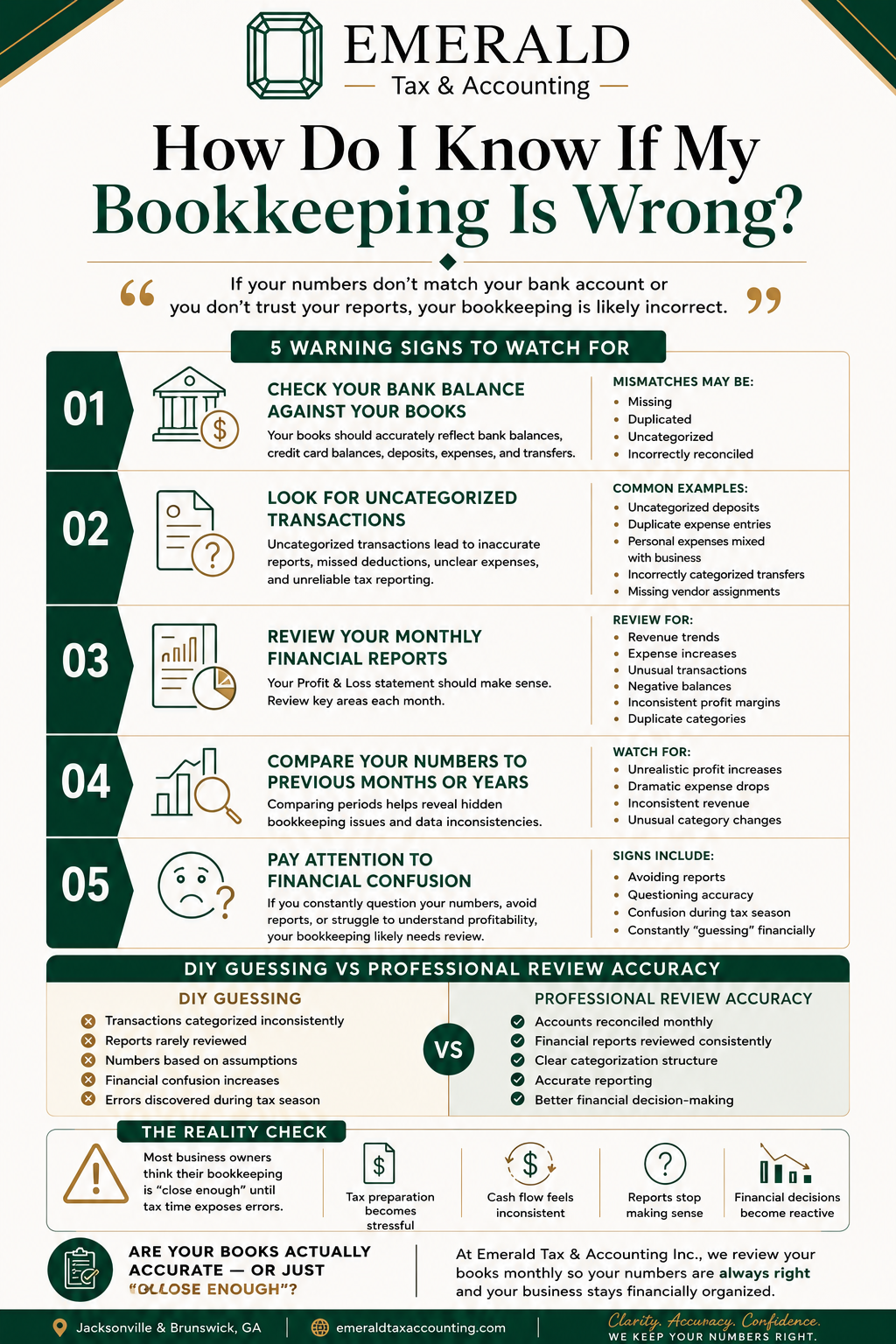
DIY Guessing vs Professional Review Accuracy
DIY Guessing
Transactions categorized inconsistently
Reports rarely reviewed
Numbers based on assumptions
Financial confusion increases
Errors discovered during tax season
Professional Review Accuracy
Accounts reconciled monthly
Financial reports reviewed consistently
Clear categorization structure
Accurate reporting
Better financial decision-making
The Reality Check
Most business owners think their bookkeeping is:
“close enough.”
Until:
tax preparation becomes stressful
deductions are missing
cash flow feels inconsistent
reports stop making sense
financial decisions become reactive
Bookkeeping problems usually build slowly before they become obvious.
That is why consistent monthly review matters.
Are your books actually accurate — or just “close enough”?
Good bookkeeping creates:
clarity
confidence
better decisions
cleaner tax preparation
healthier business operations
Your financial reports should help you lead your business with confidence — not uncertainty.
At Emerald Tax & Accounting Inc., we review bookkeeping monthly so business owners always understand their numbers and stay financially organized year-round.
