
Fitness Coaches & Personal Trainers: Get in Shape for Tax Season
Fitness coaches and personal trainers spend their days helping clients build stronger habits, improve discipline, and create healthier lifestyles.
But when tax season arrives, many fitness professionals feel overwhelmed trying to manage bookkeeping, deductions, receipts, mileage tracking, and quarterly taxes on top of already demanding schedules.
At Emerald Tax & Accounting, we help fitness coaches and personal trainers in Brunswick and Coastal Georgia simplify taxes, improve bookkeeping, and build stronger financial systems designed for small businesses.
Built on over 20 years of hands-on experience, our firm helps service-based entrepreneurs stay organized, reduce tax stress, and create more financial stability year-round.
The Direct Answer
Most fitness coaches and personal trainers struggle with taxes because they are running businesses without organized financial systems.
Common challenges include:
inconsistent income
multiple income streams
poor expense tracking
forgetting quarterly taxes
mixing personal and business spending
missing deductions
waiting until tax season to organize finances
The good news is that simple bookkeeping and tax planning systems can create major financial improvements.
With the right systems, fitness professionals can:
reduce tax stress
improve cash flow
stay organized year-round
maximize deductions legally
make more confident business decisions
better understand business profitability
The How-To Steps
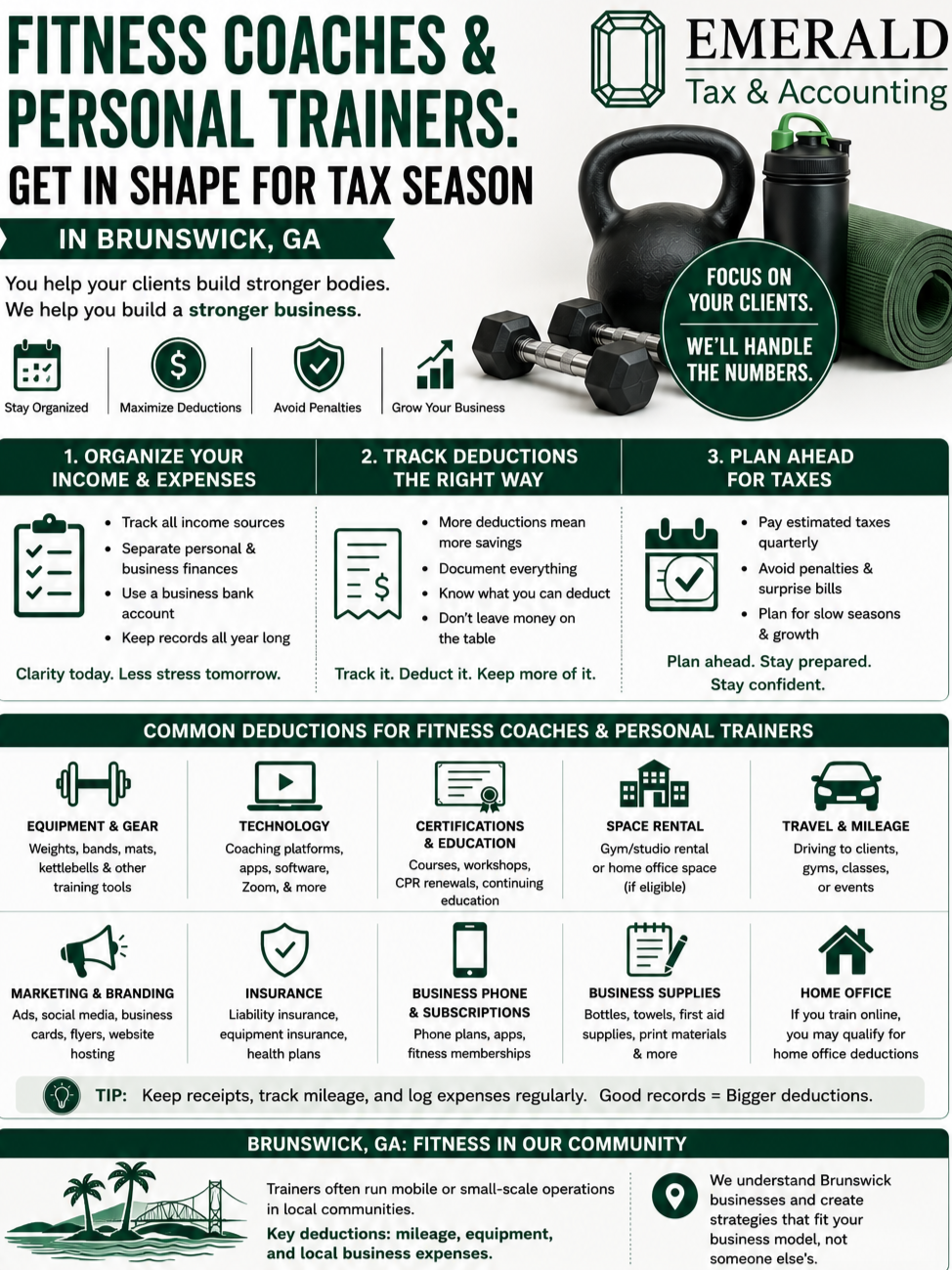
1. Organize Your Income & Expenses
Many fitness coaches and personal trainers receive income from multiple sources, including:
private training sessions
gym contracts
online coaching
fitness memberships
digital programs
class packages
Venmo or Cash App payments
subscription platforms
Keeping organized records throughout the year helps reduce financial confusion and creates more accurate bookkeeping.
It’s also important to separate personal and business spending.
Using a dedicated business bank account and business card helps:
track deductions
organize bookkeeping
prepare taxes accurately
reduce financial confusion
understand profitability more clearly
Simple financial systems create clarity.
2. Track Fitness Business Deductions Properly
Many fitness professionals spend thousands of dollars yearly on equipment, certifications, software, and travel related to their business.
Common deductions for fitness coaches and personal trainers may include:
weights and fitness equipment
resistance bands and mats
coaching and scheduling software
Zoom memberships and fitness apps
certifications and continuing education
CPR renewals and workshops
gym or studio rental fees
mileage for client sessions
marketing and advertising
website hosting
business phone expenses
liability insurance
home office expenses (if eligible)
These expenses can add up significantly throughout the year.
Without proper documentation, valuable deductions are often missed.
Proper tracking is what makes deductions count.
3. Plan Ahead for Taxes
Most fitness coaches and personal trainers operate as self-employed business owners, independent contractors, or LLCs.
That means taxes are usually not automatically withheld from income.
Quarterly estimated tax planning can help avoid:
surprise tax bills
IRS penalties
cash flow problems
financial stress during tax season
Planning ahead creates more financial stability and helps business owners avoid last-minute panic when deadlines arrive.
Strong tax planning also helps fitness professionals prepare for slower seasons, equipment investments, and future business growth more confidently.
DIY Tax Tracking vs Organized Fitness Business Finances
DIY Tax Tracking
Saving receipts in random places
Guessing deductions
Waiting until tax season
Missing mileage tracking
Financial stress during tax season
Unorganized bookkeeping
Unclear profit and cash flow
Organized Fitness Business Finances
Clear bookkeeping systems
Organized expense tracking
Planned quarterly taxes
Better financial visibility
More confidence in business decisions
Cleaner financial reports
Greater long-term financial stability
The Reality Check
Most fitness coaches and personal trainers started their business because they love helping people improve their health — not because they enjoy bookkeeping.
But as income grows, financial organization becomes more important.
Many fitness professionals are balancing:
client scheduling
online coaching
gym sessions
marketing
certifications
travel between clients
inconsistent schedules
Because of that, taxes often become:
“I’ll figure it out later.”
Unfortunately, later can turn into:
missed deductions
bookkeeping cleanup
unexpected tax bills
financial stress
confusion during tax season
Strong bookkeeping and tax planning help create stability before financial problems become overwhelming.
The goal is not perfection.
The goal is building financial systems that support long-term business growth and reduce stress year-round.
Ready to Build Stronger Financial Habits?
Emerald Tax & Accounting helps fitness coaches and personal trainers simplify bookkeeping, organize deductions, and reduce tax stress with clear financial systems designed for small businesses.
📍 Brunswick, GA
📞 912-617-9811
Because your business deserves financial systems that are just as strong as the clients you train.